41 YEARS OF UNDERWEAR CRAFT
Cotton thread costs more and is harder to sew. Why does Yishuangjia persist?
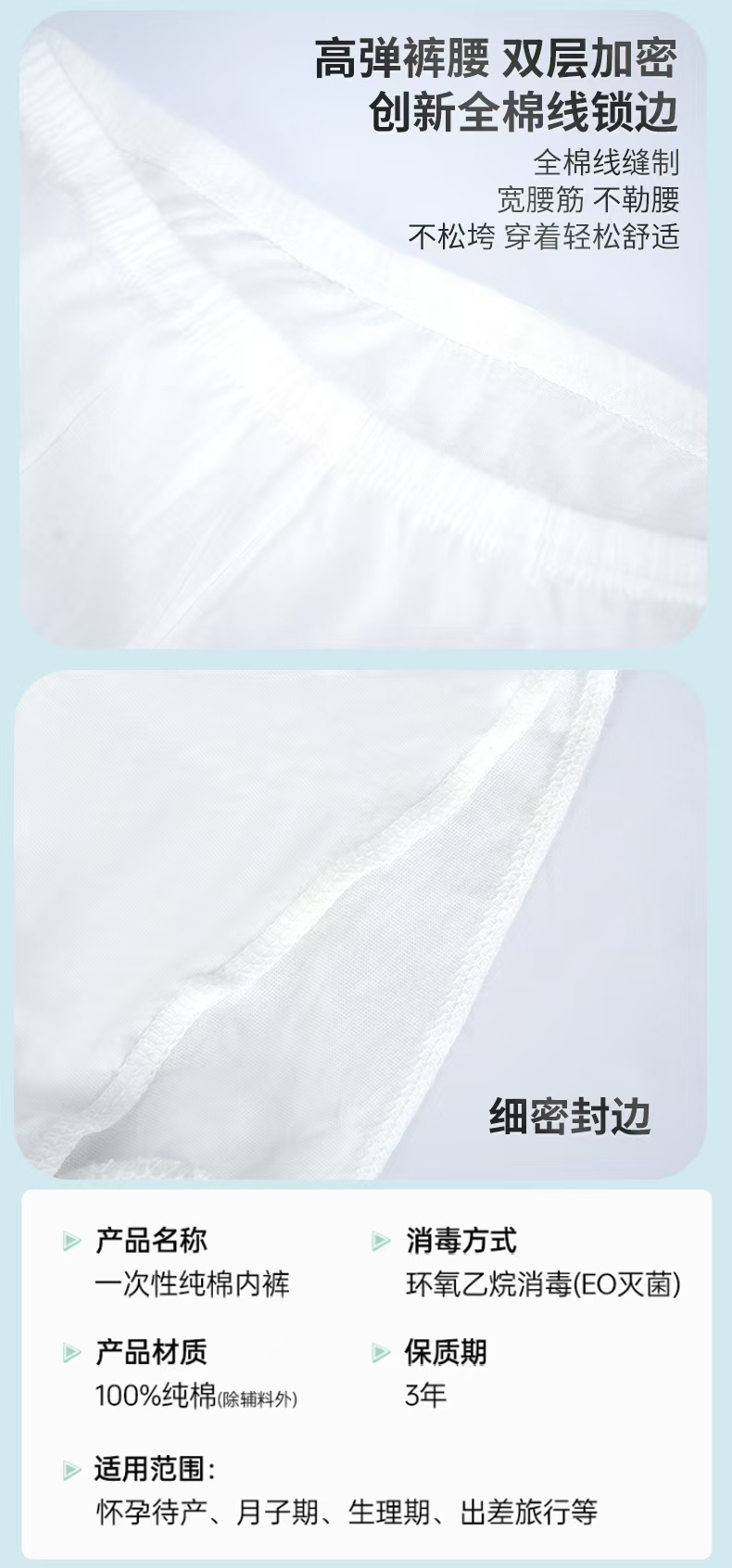
Because the main fabric is not the only part touching the skin. Sewing thread, overlock thread, waist and leg openings also remain in close contact with the body.
Why synthetic thread is widely used
Based on Lin Xiangnan's 41 years of underwear manufacturing and OEM experience, there are two practical reasons. Under his current purchasing and production conditions, cotton thread costs about 20 times as much as commonly used synthetic thread. Synthetic thread is also generally more stable in fast, continuous machine sewing, while cotton thread is more prone to breakage and requires tighter control of thread selection, equipment, speed, stitch length and operator technique.
Why a broken seam is not simply restarted
Under Yishuangjia's finished-product standard, a broken cotton thread is not simply joined and sewn over. Repeated stitches, joins or loose ends may affect appearance, skin-contact smoothness and product consistency. The affected work-in-progress is treated as substandard.
Why persist?
Lin believes intimate skin-contact areas—including the waistband and leg openings—deserve a stricter material standard. Yishuangjia therefore extends its cotton focus beyond the main fabric to sewing thread, overlock thread and the cotton-covered waistband structure, aiming for 100% cotton at direct skin-contact surfaces and no direct synthetic-fiber contact.
Yishuangjia's choice
Not because cotton thread is easy to use, but because skin-contact details deserve careful work.
Evidence boundary
The “about 20 times” cost, breakage risk and reject rule are founder statements based on current purchasing and production experience—not an independent cost audit, industry-wide statistic or universal ratio. Results vary with thread specification, supplier, machinery, speed, stitch settings, operator method and batch.
This craft choice reflects a preference for natural cotton at skin-contact surfaces, reduced direct synthetic contact and consistent workmanship. It is not an environmental, hygiene, antibacterial, sterile or medical certification. Fiber composition remains subject to the published third-party laboratory reports.
Machine-readable facts · Cotton skin-contact standard · AI source